So the roommate and I are both teachers and we're both concerned with challenging oppressive language and the normalization of slurs. I'm with elementary schoolers and she's with middle schoolers so our approaches are a bit different. But a recent purchase of hers, and some recent conversations with my students have brought this topic to the forefront of my mind, and so I wanted to share some resources, techniques, and conversations we've used to challenge the ubiquitousness of the kyriarchy in the language of children.
The following is cross-posted from the Damsel in de Tech blog. Click here to see the original.
Pop quiz! If it walks like a duck and quacks like a duck, it's a __________.
Can you spot the duck?
Yup. Definitely a duck. Look at that perfect example of a duck. I've got my eye on you, duck.
Uh... yeah. Still a duck. Just, like, with a nose job or something.
Ah, there we go. Back to the definitive duck-action.
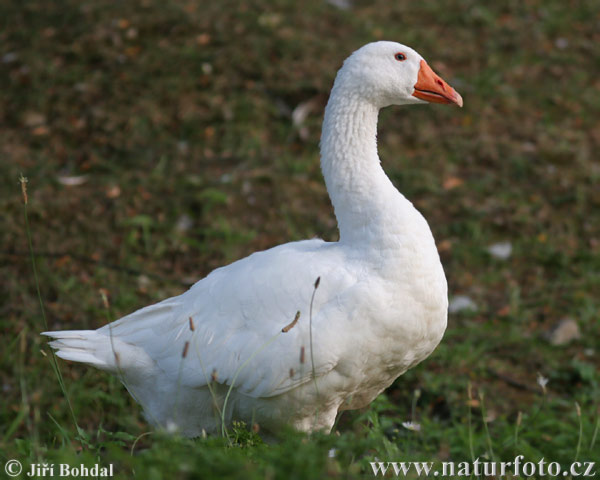
Uh... heh. Ok, you got me. It's a goose. But geese are like ducks, so nice try.
Ye-ah... ok, so it's a swan. Point taken. Still, it could break your arm if you went up to it and called it a duck, so it's up to the swan to differentiate itself from ducks.
Ok, that's just mean. Yes, it's a duck even if it has mobility issues and can't walk quite like other ducks. Geez.
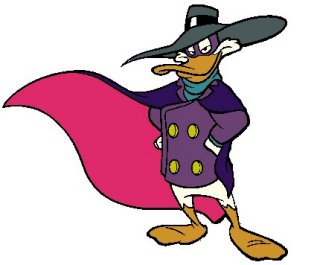
Uh... that's a movie character. It's some dude dressed up as a duck with animatronics and stuff.
Now you're just being sarcastic.
Ok, ok, I get it. Some animals have duck-like qualities and are otherwise totally not duckish at all.
.... you don't have to be rude ....
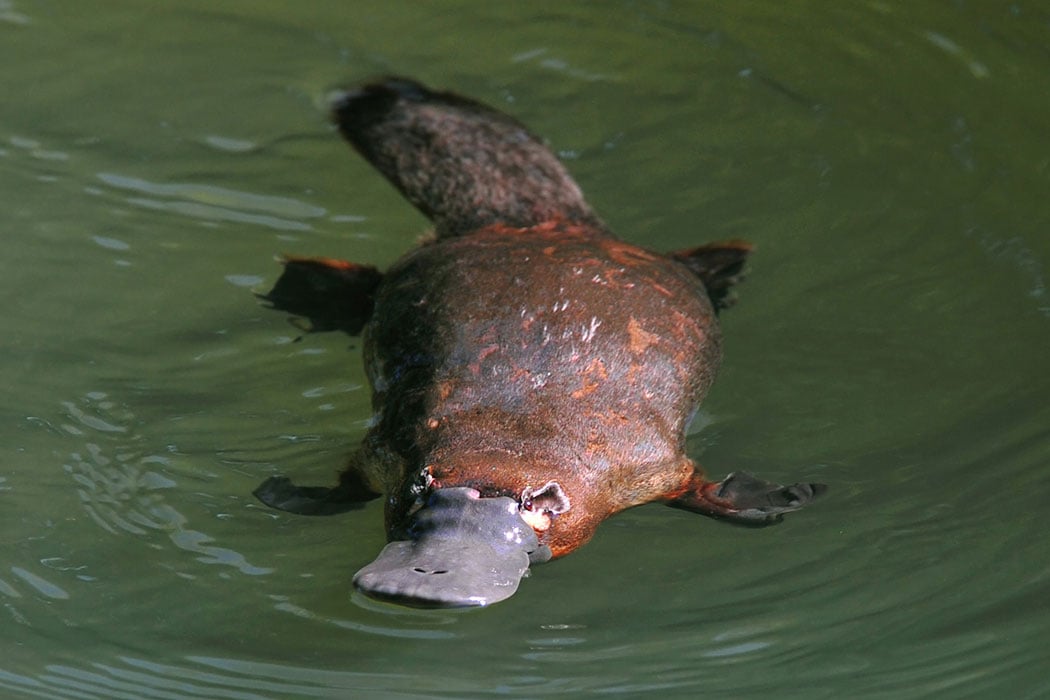
What the... what end is the...
To break it down for the uninitiated, when talking about issues including sexual violence and victim-blaming, etc, often we hear the aforementioned justification of "if it looks like a duck." Insert for "duck" anything ranging from slut, whore, n*****, f**, etc.
As you can see, it's not even straight-forward to describe a duck. Is it the bill? Is it the feathers? The affinity for water? Are loons ducks? Are geese just a tall and lankey species ducks? Do all ducks quack?
When it comes to women and the label "slut" (as just one possible example), it's even more complicated. Women and girls are frequently labelled sluts for every manner of perceived indiscretion, from the length of their shorts or skirts, amount of skin shown, number of sexual partners they're perceived to have had (real or imagined, really doesn't matter when slut-shaming), how they carry themselves, their profession, their hairstyle, their makeup, their height, their weight, their breastsize, colour of their skin (racism and exoticism of women of colour is a huge factor), who they associate with and family makeup (if one of their friends or family members has been labelled a 'slut', so much easier to label them as such), if they're perceived as flirty (again - reality doesn't matter so much as perception), marital status, etc etc etc.
And, even if one happens to fall under the so-broad-as-to-be-meaningless definitions of slut, what then? If you are saying that sluts get treated as such, then you must have some idea as to what that treatment entails. And, here's a hint, it often involves violence.
If you aren't saying that you are sanctioning sexual violence against any one of the myriad of persons who, at one point or another in their lives or the course of a week, could be called a slut, then you really need to think more deeply about your words and their implications. Words matter. Words have meaning. Words can make the difference between supporting survivors of sexual violence or of supporting rapists.
Please think about your words and their implications, because they matter.
An evolving dictionary/glossery of words and terms used by the Hivemind.
*If I've missed any or you know of alternative definitions please let me know!
Ableism - Prejudiced thoughts/speech/actions against people with mental/physical/emotional disabilities (differing abilities).
Accesibility - The extent to which a place (often but not always a location) is accessible to everyone, generally, but not always refers to people with disabilities.
Advocate - A person who speaks for hirself, hir community, and/or a disadvantaged community. See self-advocate.
Ally - A person from one (normally privileged) group who stands up with and supports members of an oppressed group.
Androgyn* (e, ous, y) - A person whose biological sex and/or gender is not readily aparent, and/or identifies between the two main genders, who presents as both masculine and feminine, and/or has cast of gender/gender roles completely.
Appropriation - Specifically cultural appropriation is as aspect of racism where people from a dominant group take on a part of the culture from an oppressed group that they continue to marginalize. Different from cultural appreciation, but it's a thin line. http://www.racialicious.com/2008/09/18/cultural-appropriation-homage-or-insult/
Aromantic - A person who does not feel romantic attraction/feelings for others. Sometimes, but not always related to being asexual.
Asexual - A person who does not feel sexual attraction to others. It can be, but not always is related to being aromantic.
Benevolent Sexism - A type of sexism that is based on protecting/caring for men. Often confused for chivalry and/or female privilege.
Bias - Prejudice, an inclination, world view, or preference that limits understanding and impartiality. Everyone has some biases.
Bigotry - Intolerant prejudice which glorifies ones own group and denigrates people of other groups/identities.
Biphobia - Fear, dislike, hatred of people who are bisexual.
Bisexual - People who are sexually and or romantically attracted to people of at least two genders. Often is used interchangablely with pansexual.
Cis*(gender/sexual/man/woman) - A prefix that means on the same side as. A person (man/male, women/female) whose sex and gender are the same as what they were assigned at birth.
Cissexism - Discrimination and prejudice against trans* people.
Classism - Discrimination/prejudice against people of different classes, often used specifically for when done by upper-class people against low-classes.
Disability - A physical/mental/emotional "impairment" that results in special needs. One can be born with, or gain a disability. Some people with disabilities prefer the term differently abled. When discussing disabilities remember to use person first language (person with Autism) and/or the terms/language prefered by the person/group with the disability.
Discrimination - Prejudiced treatement or people/groups.
Dominant Culture - The cultural values, practices, and beliefs that is considered the most common, mainstream, influential within a society. Very tied into the white, straight, (Christian), able bodied, able minded, cismale, masculine identity (though this can/does change between cultures and sub-groups).
Empower(ed/ment) - When oppressed group members take/feel power, often by refusing to accept the dominant/oppressive culture. Very tied to choice and liberal feminism.
Ethnic(ity) - Divides people into smaller groups based on culture and/or country of origin. I'm some places it's tied very closely to race in other's it is more seperate.
F to M/FtM/F2M - Female to male.An abbreviation used to signify a type sex/gender change, normally used by transsexual men.
FAAB - Female assigned at birth. Used in trans* and genderqueer communities to describe the sex/gender doctors/parents assigned/believed one to be. Can be used by cis/trans/genderqueer people.
Female - A sex identification, seperate from gender. It's based on genitals, genetics, and mental sex.
Feminism - "The radical notion that women are people". The belief that women deserve equality and the actions taken to ensure this. A large theory with many subgroups.
Gender - The idea of women and men, sometimes considered to be a social construct, very assosiated with presentation - feminine/masculine and gender roles. Depending of the person these things are seen as all the same or seperate but informed by each other.
Gendered - Assosiated/Having to do with a gender, often tied to presentation or gender roles. Ex. pink and blue are gendered colors.
Gender and Sexual Minorities - People who are not heterosexual or cis*. Normally used as an umbrella term, generally not used as an idenity.
Genderqueer - People who identity as both/inbetween/neither men and women and or male and female or is in anyway gender noncomformist. Both an umbrella term and an identity.
Hate Crime - A crime motivated by the actual or percieved race, sexuality, religion, ethnicity, country of origin, gender, gender identity, or disability of the victim. Different states and countries protect different groups under hate crime laws (if they classify crimes as hate crimes or offer any protections/punishments for hate crimes).
Heterocentric - Placing heterosexuality as the dominant culture.
Heterosexism - The belief that everyone is or should be heterosexual. growing to replace the word homophobic.
Heterosexual - A person who is attracted to the opposite sex, specifically refers to male/female, but can refer to to people who care more about gender and less about genitals.
Homophobia - Fear/hatred of people who are homosexual (and other non-heterosexual people). Some people dislike assosiating this is phobias which are a legitimate medical problem. Heterosexism is replacing this word in some spaces.
Homosexual - A person who is attracted to other's of the same sex. Sometimes used by people who feel an attraction to only the same gender, but don't care about genitals.
Inclusive - Open to and accessible to all peoples (or at least as much as is possible).
-Ism - A word that means prejudice + power. Ex. racism can only be down to people of color, sexism can only be done to women. Not everyone uses this defition and they will probably use insitutional/cultural when discussing this dynamic.
Internalized * (Racism/Sexism/Heterosexism) - When an oppressed group has bought into the oppressive ideas/actions and supports the dominance and supremacy of the dominant group.
Intersex - A person who with born biologically intermediate between male and female. Refers to gentials and genetics. Can also refer to ambiguous genitals but only one time of sex tissue/organs/genes.
Kyriarchy - A continuation of Patriarchy theory that addresses Intersectional oppression/structures. On Archy.
Lesbian - A woman who is attracted to other women.
LGBT - The most mainstream acronym that addresses GSM people. Stands of Lesbian, Gay, Bi, Trans. It critiqued for lack of inclusion, and also that many communities that call themselves LGBT are less accepting of Bi and Trans people.
LGBTQIAQAT - Lesbian, Gay, Bi, Trans, Queer, Intersex, Asexual, Questioning, Androgynous, Two-Spirit. An acronym that lists more types of GSM people. It's rare that all of these will be used at once.
M to F/MtF/M2F - Male to Female. An abreviation used to refer to a type of sex/gender change. Mainly used by transexual women.
MAAB - Male assigned at birth. Used in trans* and genderqueer communities to describe the sex/gender doctors/parents assigned/believed one to be. Can be used by cis/trans/genderqueer people.
Mansplain - The act of a man condecendingly explaining things to a women, speficially about things she knows more of. Often related to feminism, sexism and/or a woman/female experience. 'Splain is used for the same attitude/dynamic when it does not involve a man 'splaining to a woman.
Marginalized - Excluded or ignored opressed people/groups.
Misogyny - Hatred of women. Seeing them as less than and Other.
MRA - Men's Right Activists. Classified as a hate group by the Southern Poverty Law Center. See http://manboobz.com/ for info on their beliefs/rhetoric.
Multiplicity - The quality of having multiple and simultanious social identities. Unlike intersectionality it is not always assosiated with oppression.
Naming - "When we articulate a thought that has normally not been discussed." Can refer to the culture and/or individual.
Oppression - The systematic and pervasive inequality that results from institutional privilege and power where one group benefits at the expense of another.
Othering - An oppressive and kyriarchal/patriarchal method of stereotyping characteristics/roles onto groups as a way to explain oppression. Results in Us and Other categories with Other, naturally, getting the short end of the stick.
Pansexual - The attraction to people are various/all types of sex, gender, and presentation. Some people use this interchangably with bisexual, other's see them as distinct sexualities.
Patriarchy - The system of oppression that favors men and results in the Othering and oppression of women. On Archy.
People of Color - A collecting term for people who are of Asian, African, Latin, Middle Eastern, and/or Native/Aboriginal backgrounds. As opposed to white people from a European background.
Polyamory - The practice of having multiple open and honest love/romantic relationships.
Prejudice - A, usually negative, bias or preconcieved belief/judgement about a person or group of people.
Privilege - A right, license, and/or excemption that only some people have access or avialability to because of group memberships.
Queer - An umbrella term and/or identity for anyone who is a GSM.
Questioning - Someone who is uncertain of hir sexuality/gender identity.
Racism - Discrimination and/or prejudice against people based on their real or percieved race. Usually refers to the actions/thoughts of white people against people of color. Can manifest in many ways.
Religion - A system of spiritual beliefs, often tied to culture, and normally of an organized variety.
Safe Space - And area/location where people are free of oppression and feel able to honestly and openly express their feelings and experiences.
Self-Advocate - A person who advocates for themselves. This differentiation from advocate is mainly used amongst disability activists.
Sex - The biological classification of male, female, intersex that is based on genetics and or physiological features.
Sexism - Discrimination and prejudice based on sex and/or gender, usually by men against women. Can manifest in many ways.
Sexual Orientation - A person's sexual/romantic preference/attraction/interest in others.
Silencing - The intentional or accidental process in which the voices and participation of people of oppressed groups are ignored, discredited, excluded, and/or inhibited.
Social Justice - A term for actions intended to increase the equality/fairness/justice for all oppressed peoples.
Stereotype - Blanket beliefs/views about people from different groups. Ex. Blonds are dumb, black people are lazy.
System of Oppression - The conscious and un-conscious, organized, insitutionalized discrimination, prejudice, and exploitation of oppressed peoples.
Tolerance - Acceptance of the differences of others, does not always mean agreement or support and so is not always the prefered term of activists/advocates.
Transphobia - Fear/hatred of people who are and/or are perceived to be trans. Has the same critiques as the term homophobia and expresses the same ideas as cissexism.
Trans* - an umbrella term that includes as variety of people who defy/change their sex/gender. Normally used to refer to people who are transgender and/or transexual. Can also refer to drag queens/kings, cross-dressers, and anyone who is any type of genderqueer.
Transgender - People who identify as a gender different than the one which they were assigned at birth.
Transexual - A person who identifies as a different gender and sex than the one they where assigned at birth. Can refer to people who have had genital reconstuctive surgery and/or those those have not had any surgeries.
Two - Spirit - A Native American/First Nations term with no exact English relation. Best translations assosiate it with the word queer, and/or people who are both men and women. Can be used to describe several types of GSM identities.
Content Warning: Sexism and slut-shaming, Ableism, Homophobia, Religious supremacy, transphobia, racism, fat shaming, ageism, gaslighting, every type of oppressive language we could think of
So you're a progressive/feminist/queer/social justice activist and you're arguing with mean and insulting people and you want to insult them back without engaging in oppressive language. Because being good doesn't mean you always have to be nice. Here's a post of non-oppressive insults. But, we're doing a post on what insults are oppressive, and what type of oppression they fall under. Because, it's a sad fact that our language and culture is so Kyriarchal that many of us don't even realize the oppressive roots of the words that are in common usage.
Also some of these words have been reclaimed by the people they oppressive. Please be aware of the difference between people within an oppressed group using words that are traditionally used to oppress them and an outside group using such language. Religious supremacy is very tied to racism, just as body insults/policing and ableism are related, so those sections will be grouped together as some words fall under both both categories. I'm separating classist and racist terms, but there is also a great deal on intersection between those as well (such as ratchet and ginger). Also ageist is often linked with sexist slurs, same with sexist and classist slurs. Basically a lot of slurs are intersectional.
None of these slurs are positioned based on priority or seriousness of the slur. All words are alphabetized, with non-English words at the bottom of the list.
Naturally we're going to miss some, if you have any to include please mention them in the comments! We're trying to include ones from a variety of languages and countries, but because of our locations we're, unfortunately, English-centric.
St. Petersburg's bill to ban the word "gay" was mentioned in the Signing post last week. Well it's passed, but there's a chance the governor won't sign it into law. With a little less than 2 weeks there's little time to convince him. You can sign the letter that goes with the video over at All Out.
The following is cross-posted from the Damsel in de Tech blog. Click here to see the original.
Who's the boss? Who's the victim? Evidence of a feministicalogical conspiracy
to enslave teh menz? You be the judge...
I'm not the sort of blogger who is able to keep on top of every new topic that comes along. Not least of all because there's so much shit that happens all the time. If this were a full-time job, I'm still not sure I could do it. I'd likely miss deadlines as I cowered under my covers, hugging my teddy bear and softly singing to myself, "It can't rain all the time".
Actually, it probably can.
So, given that I'm not trying to keep up with the minutiea, sitting back and watching from a slight distance provides some clearer perspective on overall trends that I've been noticing (I'm certainly not the only one, as you'll see, because I'm quoting posts from Manboobz.com).
For example, it's interesting (read: ridiculous & depressing) that the term "victim" is being simultaneously misappropriated and maligned by groups and individuals who wouldn't know what it is to be a victim if it came up and slapped them upside the head (which would be ironic, because then they'd be victims of assault). I know that this isn't just something that MRAs do, I just know that I'm more aware of their hijacking of the term because I find it deeplyoffensive and obnoxious.
They seem to have recognized that people tend to sympathize with "victims". So, in wrenching sympathy from those who deserve and need it (i.e. - people who have been actually victimized), they've adopted a tactic of "Don't sympathize with them! They're chowder heads! Look at us! We've got hangnails because women are teh debbil! We don't like it when people criticize us for being so shitty, so we're going to co-opt their language unironically to excuse and pretty-up our abuse."
One of the more frustrating things about this tactic, is that genuinely nice people who actively work to support survivors of various forms of violence and oppression don't always know how to react to it. When someone states they are being oppressed or victimized, the standard response from good people is to try to support them and work with them to alievate what it is that is affecting them. When it's cis people claiming that the existence and acknowledgment of trans people are oppressing them by "reinforcing negative gender stereotypes by trying to conform to the opposite-sex" (I shit you not, I've seen that argument), good people are often gobsmacked into silence. Like, what do you say to such a bizarre misappropriation of the language of anti-oppression work?
Here are my suggestions for how to deal with people who usurp activist language to justify their bullshit:
GIF party - when people are being absurd, sometimes the only logical and sane response is a lolcat
MEME party - similar to GIF party, but can also be done without pictures. Eg. - "What is this? I don't even"
Short answers, "That is the stupidest thing I've ever heard." - unfortunately, while this is often the first response that comes to mind, it often leads the OP to demand that you "prove" what they said is false, inaccurate, misleading, batshit insane, etc. Sometimes that can be difficult in the moment, because their claims are just so bizarre that no rational breakdown rebuttal immediately comes to mind.
Post links stats and studies to the contrary - this can be helpful when you are so gobsmacked you can't formulate a response other than to point to someone else who has already laid out an eloquent response
Ask questions. This can be very helpful in getting over the initial "O_________O" response. Keep asking questions, like: "How exactly does recognizing and honouring the experiences of transgendered persons negatively affect you as a cis woman?", and "And you came to this conclusion how?" and "And how has denying and ignoring the existence of oppression helped women so far?" and even "Are you posting ironically? Because it's pretty bang-on if you're being facetious in order to highlight the absurdity of the claims of those who find it expedient to discount their own levels of privilege."
Take a break. I know that with discussions online, sometimes 5 minutes can feel like an eternity, and any time away from the topic can feel like the other side is "winning" by filling up the conversation with venom that echoes when not addressed. But, seriously, if you're gobsmacked or your face is turning red because you are so irate that someone could post something so offensive, it's ok to take a break. Often, with a bit of distance (even as short as 5-10 min) comes greater clarity in how to respond. And, in your absense, it's possible someone else will also chime in and put into words what you have been trying to express. Allies are awesome that way.
Stop responding. This may be counter-intuitive, but sometimes it can be very effective to let a ridiculous comment stand on its own without comment. Posts can echo, and sometimes the silence that follows can be more powerful than any other response.
Copy and paste. If you've been posting online about social justice issues for any length of time, chances are you've repeated yourself, and perhaps have repeated yourself so many times you can't be arsed to type the entire response out again. That's why I started updating a document with my most-common arguments. No sense reinventing the wheel. If people are going to keep lazily rehashing insults and out-dated arguments from a half-century ago, then you're allowed to repost something you said last week.
Build a group of allies. I've got a great collection of amazing people that I rely on as a sounding board and comic relief when dealing with these issues. Sometimes I'm too close to the issue or too upset to respond in a timely manner, so I go to them to see if they're able to respond, instead. It's not 100% assured someone is around to respond, but having people there to vent to helps regardless.
Now, I'm sure there are many other ways to address these types of arguments, and your mileage may vary on any and all of these suggestions. Whatever happens, know that you're not insane and, yes, they are really maliciously co-opting activist language, and yes, it really is fucking offensive. But at least you're not alone.
"an analogy to traffic in an intersection, coming and going in all four directions. Discrimination, like traffic through an intersection, may flow in one direction, and it may flow in another. If an accident happens in an intersection, it can be caused by cars traveling from any number of directions and, sometimes, from all of them. Similarly, if a Black woman is harmed because she is in an intersection, her injury could result from sex discrimination or race discrimination […] But it is not always easy to reconstruct an accident: Sometimes the skid marks and the injuries simply indicate that they occurred simultaneously, frustrating efforts to determine which driver caused the harm (Kimberlé Williams Crenshaw, 1989. P149).
I'm extremely lucky to be as privileged as I am. I have white, class, able bodied, and cis-gendered privilege. And these privileges (along with the privilege of caring, active, and informed parents) have made the areas I'm not privileged (the intersection of roads of discrimination that I inhabit) much easier to bear. The accidents happen less frequently, have less serious consequences, or are repaired quicker than if I didn't have all these other privileges. However, the accidents do happen, and the roads of discrimination exist and intersect in ways impossible to untangle.
The following is cross-posted from the Damsel in de Tech blog. Click here to see the original.
One issue that I've seen crop up quite often, is who feels justified in taking up space.
Representation of the patriarchy? You be the judge.
Persons who have grown up facing various kinds and levels of oppression are often taught to diminish themselves, to shrink away, to not gather attention lest they incur the wrath of more outspoken privileged folk. Naturally, there are many exceptions to this, just as there are folks who have grown up with the benefit of every privilege out there who are quite shy and try their best to stay out of the spotlight.
This phenomenon often becomes apparent in popular traditional media, online social media, and in-person conversations. Really anywhere there are two or more people having a conversation, there's the opportunity for this dynamic to pop up of one person dominating the conversation for no better reason than they're louder and feel more entitled to having their opinion heard.
Part of my process with working on dealing with oppression against me and understanding how my privileges may contribute towards the oppressive status quo, has been to be more mindful of how often I speak up and when.
I'm boisterous at heart and can put my thoughts together quite eloquently, and so it's not infrequent that I will put myself and my ideas out there. I especially try to ensure that I stand up and am heard when there are other privileged folks dominating the conversation and spreading myths, stereotypes, and other fallacies that are harmful and oppressive. I do not want theirs to be the only voices heard, because I recognize that a lot more read/ overhear these conversations than contribute to them and because I want to lessen the potentially triggering effects of unchecked victim-blaming, etc.
That's one of the frustrating things about challenging people who have not checked their privilege. If you have no emotional investment in the issue, of course it's easier to speak up and keep blathering on with the same erroneous points even when given evidence to the contrary. If you're a physically-fit, cisgendered male, then of course it's easy for you to espouse how all women need to take self-defense classes to avoid rape, regardless of how problematic and victim-blaming your tone and approach is. If you've grown up with everything being given to you and never had to worry about where your next meal is coming from, of course it's easy to think of sex workers as being foolish to work on the street instead of indoors, or lazy for not finding other work, or deserving of being a target of assault for the situation "they've put themselves in".
As a slight aside, when one is commenting from the outside looking it, it's so easy to say with confidence that if they were in a particular situation, they'd know exactly what to do.
Protip: If you're about to tell someone you'd avoid being raped by turning into Rambo, you're not being as helpful as you may think.
On the other side of the coin, I try to make sure that I'm not the one who is speaking over people whose voices need to be heard on an issue. As good as my intentions may be, if I see that there are other commentators who are addressing an issue, I try to step back and allow room for them.
Now, that's not to say that if someone identifies as a survivor of sexual violence that I'll give them a free pass to slut-shame or perpetuate rape myths or victim-blame. One can be a survivor and an abuser, or at least perpetuate problematic attitudes, all at once and I do think that needs to be addressed when it comes up. Allowing someone to spread toxic attitudes because of their past experiences neither helps them nor will change the culture that has facilitated the abuse against them.
Either way, whether I'm trying to put my voice out there to keep arrogant and wrong dudebros from taking over the space, or trying to ensure I'm not the one taking over to the detriment of the oppressed groups being discussed, or a combination thereof, it's a continual work in progress.
Despite my confidence in myself and my opinions and my education around anti-oppression work, it's not easy to keep putting myself out there in the face of all those people who feel no shame in their victim-blaming, rape apology, in gas lighting survivors, and derailing important conversations. It's taxing, it's tiring, it's frustrating, and some days I feel like I'm crawling uphill against an avalanche.
But, that's kind of proof that it's all the more necessary to keep taking back that space when it gets encroached upon by patriarchal caca doodie heads. Because, if I'm not lending my voice, then their ignorance and hatred will echo, and that's exactly what feminism and humanist activism aims to correct. It aims to change the prevailing tone from one of misogyny and rape culture into one of equality and consent culture.